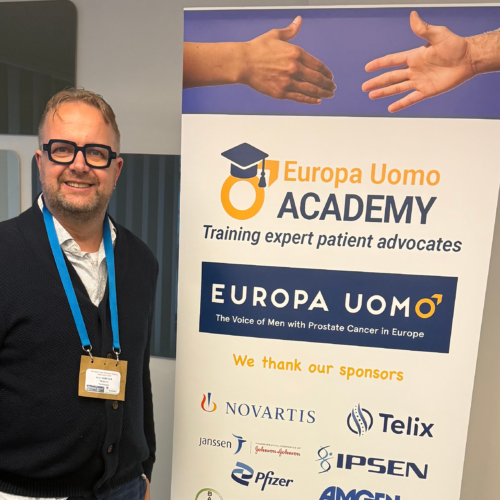
Karl Mortier was inspired by this summer’s advocate training event
I had the honour of being the Belgian representative at the 2025 Europa Uomo Academy, the annual training programme to help representatives from Europa Uomo member organisations gain knowledge of prostate cancer issues and become expert patient advocates.
It was an intense but inspiring experience that gave me a deep sense of connection. Behind every diagnosis lies a unique story, with profound emotions for both the patient and their loved ones. So the event brought the subject very close to me, but it also confirmed that the treatment I chose was the right one. At the same time, I saw how far science has already advanced, which gave me hope and confidence.
I participated in more than 30 workshops and discussions, covering both the medical aspects of prostate cancer and its psychosocial impact. I met professors, specialists, urologists, and patients from eighteen countries. One of the highlights was a dialogue with members of the European Parliament and the European Commission, but it became clear that even in Europe, budgets for healthcare and supportive initiatives are under pressure.
We spoke openly about our experiences and about the importance of communication and breaking the taboo surrounding prostate cancer. Many men know very little about their prostate until they get older or face the disease themselves. That’s why targeted and early screening is crucial.
What I was able to contribute most was my perspective as a younger patient. Prostate cancer is still too often perceived as a disease of older men. My story shows that younger men can also be affected. In that sense, I was able to give the disease another face – and a voice to those who may feel unseen.
My key takeaway? Everything starts with timely screening and active follow-up. A PSA level on its own means very little; only in combination with genetic factors or significantly elevated values should further steps be considered. This prevents opportunistic diagnoses and unnecessary treatments. The right treatment at the right time makes all the difference.