A new initiative to support men and their loved ones
Europa Uomo is launching a new international initiative aimed at better understanding how prostate cancer affects everyday life, relationships, and mental well-being – and at developing practical support for men and their loved ones across Europe.
The initiative also highlights an important perspective: people live within different cultural, religious, and social contexts. In some of these, illness, the body, and sexuality may be surrounded by silence, stigma, or taboo – shaping how, or whether, these topics are discussed.
When a diagnosis changes everything
The room is quiet.
The doctor is talking, explaining test results and treatment options. There are many words, but it is hard to take them in.
Then comes the word. Cancer.
Many men diagnosed with prostate cancer describe this moment in a similar way: time seems to stop. Suddenly, the future looks different.
But often, one of the hardest moments comes later.
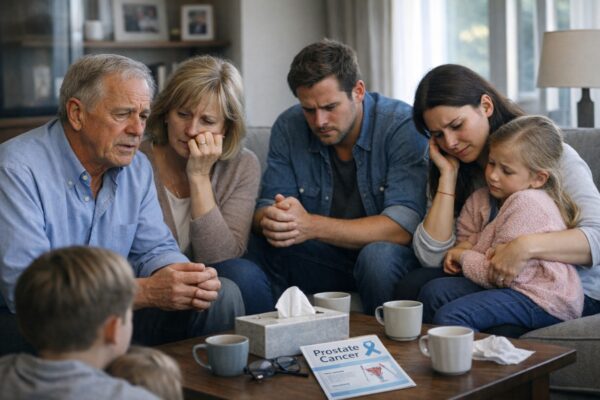
When a man goes home and tells his loved ones.
How do you tell your partner? How do you explain it to your children? How do you look your loved ones in the eye when you are still trying to understand it yourself?
It is often the moment when you first see fear in their faces.
That is when it becomes clear: cancer does not affect just one person. It affects the whole family.
Prostate cancer affects many aspects of life
Prostate cancer is one of the most common cancers among men in Europe. Treatments continue to improve, and more men are living longer after diagnosis.
However, the impact goes far beyond medical care.
Many men experience:
● changes in sexuality
● challenges in relationships and intimacy
● uncertainty about identity
● emotional strain and difficulties coping with it
● changes in family life
Some effects may be long-term, such as incontinence or sexual dysfunction.
Culture, beliefs and silence
In many cultures and religions, it is not easy to talk about illness, the body, or sexuality.
In some communities:
● illness may be considered a taboo
● men are expected to stay strong and not show vulnerability
● changes in sexuality may cause deep shame
● seeking help may be delayed due to fear or stigma
This can lead to men facing their experiences alone.
That is why support must be culturally sensitive and safe, while also creating space for open conversation.
Sexual minorities must be better recognised
Prostate cancer does not only affect heterosexual men.
Gay, bisexual and trans men also face the disease – often in systems that do not fully recognise their needs:
● care pathways and materials may be heteronormative
● partners and relationships may not be acknowledged
● discussing sexuality can be especially difficult
● fear of discrimination may limit openness
This initiative aims to ensure that every man is seen and supported as he is.
Loved ones – and those who are alone
Loved ones also go through their own crisis.
A partner tries to stay strong. Children try to understand. Friends may not know what to say.
But not everyone has a partner or close family.
What if a man lives alone? Who listens then? Who asks how he is really doing?
Loneliness can become one of the heaviest burdens – and directly affects emotional capacity.
The need for a new approach
Many patients receive good medical care.
But there is often less support for questions related to everyday life, relationships, and emotions:
● How to talk about changes in sexuality?
● How to deal with shame or uncertainty?
● How to consider cultural or religious perspectives?
● How to support a relationship?
● How to maintain emotional capacity during and after treatment?
These are the questions that need more attention.
A new initiative: life at the centre
Europa Uomo’s new initiative takes a holistic approach to prostate cancer.
The focus is not only on treatment – but on life with the disease.
The project brings together:
● men living with prostate cancer
● partners and families
● men living alone
● people from diverse cultural and minority backgrounds
● patient organisations and experts
What kind of support will be developed?
The initiative will develop practical support tools, such as:
● conversation models for patients and loved ones
● workshops on relationships and intimacy
● materials for partners and families
● support for men living alone
● culturally sensitive guidance
● inclusive approaches for sexual minorities
● tools to improve communication
The goal is to create a model that can be used across Europe.
No one should face this alone
Prostate cancer changes life – sometimes permanently.
With the right support, it is still possible to find new ways to live, connect, and move forward.
This initiative aims to ensure that:
● no one is left alone
● everyone has the opportunity to be heard
● different life situations are recognised
Because life with prostate cancer is more than treatment.
It is everyday life. It is relationships. It is identity. And above all – it is hope.
Want to learn more or get involved? Follow the progress of the initiative or please contact Miia Valross -project manager- through email livewithprostatecancer@gmail.com