|
In this issue:
|
|
|
|
|
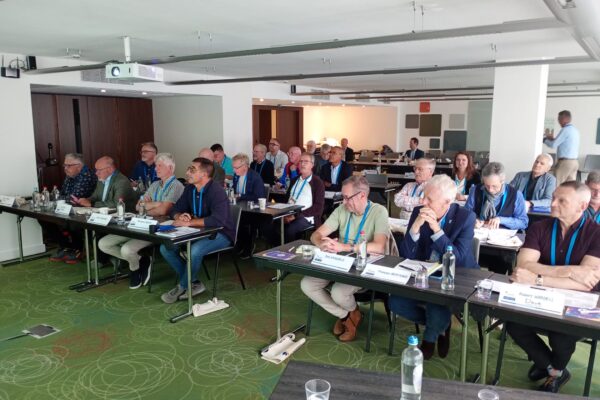
Europa Uomo announces new Winter School
Training for next generation of patient advocates
|
|
|
|
|
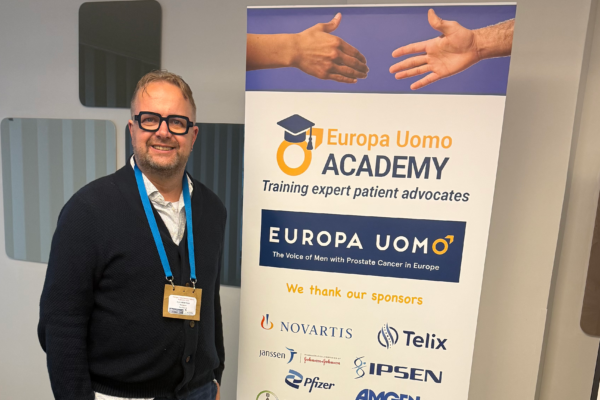
My voice as a young patient at the Europa Uomo Academy
Karl Mortier was inspired by this summer’s advocate training event.
|
|
|
|
|
'Steady but unequal progress' on prostate cancer screening
New report urges EU countries to step up efforts towards national programmes
|
|
|
Prostate Research and Treatments
New blood test approved to help detect prostate cancer
The American drug regulator, the FDA, has approved a new blood test to help doctors decide whether men (age 50 and over) with elevated PSA levels should have a prostate biopsy. The IsoPSA blood test looks at the structure of PSA proteins in the blood, giving more accurate information about cancer risk.
In a large study of over 1,800 men, IsoPSA performed better than total PSA and free PSA at detecting both high-grade and any-grade prostate cancer. The authors say the test may help reduce unnecessary biopsies—about four in ten low-risk patients could potentially avoid the procedure.
Reference: https://tinyurl.com/2wda4xmy
|
|
|
US prostate cancer statistics 2025
In the United States, prostate cancer incidence increased steadily from 2017 to 2021, rising by 2.4% annually for localised disease, 4.6% for regional disease and 4.8% for distant disease. Despite significant progress over the past decade, the five-year survival for patients with metastatic disease remains at 50%. The report underscores the need to educate primary care providers on discussing screening with eligible patients and to encourage patients to seek care promptly if symptoms arise.
Reference: Kratzer TB, Mazzitelli N, Star J, et al. Prostate cancer statistics, 2025. CA Cancer J Clin. Published online September 2, 2025.
|
|
|
Radioligand with radiotherapy may improve survival
Does the addition of a prostate-specific membrane antigen (PSMA)-targeting radioligand therapy to stereotactic body radiotherapy (SBRT) improve progression-free survival in men with PSMA-defined oligorecurrent hormone-sensitive prostate cancer?
A phase 2 trial found that the addition of the radioligand ¹⁷⁷Lu-PNT2002 nearly doubled progression-free survival in men with a few recurrent hormone-sensitive prostate cancer lesions. Median progression-free survival was 17.6 months compared with 7.4 months with SBRT alone.
This suggests ¹⁷⁷Lu + SBRT may better control early recurrent prostate cancer. But larger trials are needed.
Reference: Kishan AU et al., J Clin Oncol, Nov 12, 2025.
|
|
|
Sir Cliff Richard Speaks Out After Prostate Cancer Treatment
Sir Cliff reveals on TV that he has undergone prostate cancer treatment. During the interview on “The Morning Show” on ITV1 in UK, Sir Cliff added that he thought it was “absolutely ridiculous” that a national screening programme for prostate cancer is not currently in place, despite it being the most prevalent form of cancer among men. For full interview and write up, follow this link.
|
|
|
PROSCA 2025 in a nutshell
At the Global Forum on Prostate Cancer (PROSCA 25) in Lisbon, experts explored translating the latest prostate cancer data into clinical practice. Discussions highlighted personalised treatment strategies for elderly patients, advances in radiotherapy and PSMA PET/CT imaging, and the growing role of genetic testing alongside traditional pathology. Looking ahead to 2026, innovations in drug combinations, diagnostics and patient-centered care aim to improve outcomes while ensuring equitable access to treatment worldwide.
Read a short meeting report written by Dirk Wyndaele, prostate cancer patient, The Netherlands.
|
|
|
Unlocking the mysteries of prostate cancer
|
|
|
Europa Uomo News
Europa Uomo’s new committees are off to a strong start
The newly formed working committees of Europa Uomo are now up and running, bringing together passionate patient representatives eager to support the Board and advance our initiatives.
-
The Legal and Membership Committee has already drafted an updated version of the Statutes and Bye-Laws, which will be presented for approval at the 2026 General Assembly in Cyprus.
-
The Finance Committee has begun reviewing the budgets for projects planned in 2026.
-
The Communication Committee held its first meeting, focusing on creating content for the Europa Uomo website, social media and this Update newsletter.
-
The Mental Health Committee met for the first time to discuss a potential inaugural project aimed at supporting the mental health of prostate cancer patients and their families.
Other committees will soon start their work, ensuring that every aspect of Europa Uomo’s mission is moving forward with energy and dedication.
|
|
|
2nd National Prostate Cancer Screening Day in Switzerland
The 2nd National Prostate Cancer Screening Day took place at the University of Zurich to raise awareness about prostate cancer and highlight the importance of early detection and shared decision-making. Experts in urology, oncology and ethics presented current knowledge on epidemiology, screening, prevention, active surveillance, and treatment options. Patient representatives stressed the value of patient involvement and mutual support in making informed decisions. Europa Uomo Switzerland advocates for a national, organised screening programme and continues to provide information, guidance, and self-help resources for men across Switzerland.

Read the full text here.
|
|
|
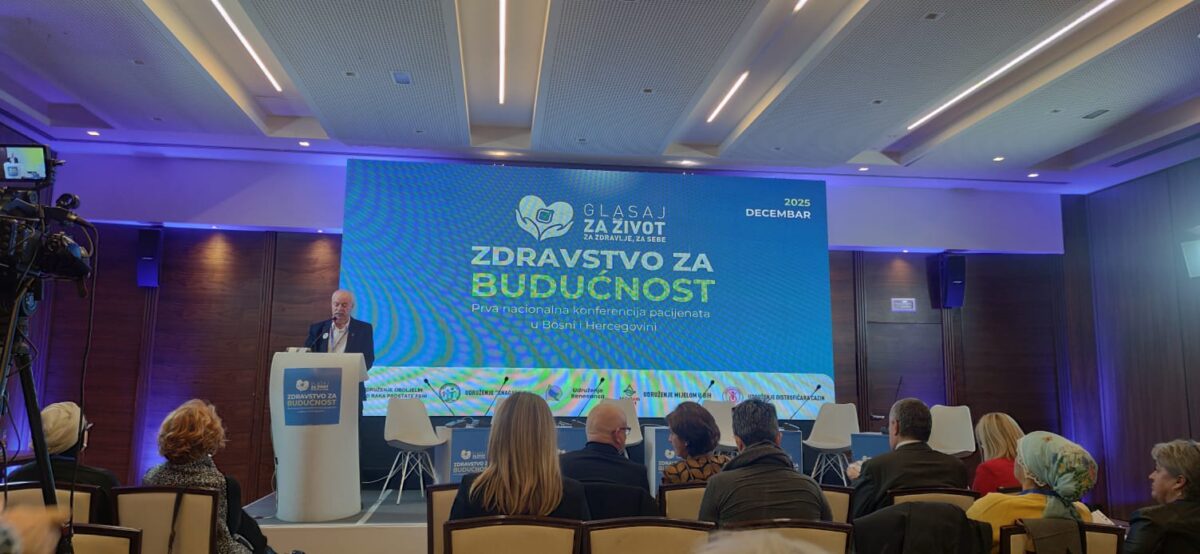
A first national patients conference held in Sarajevo
On 4th to 5th December, a first national patients conference “Healthcare for the future” was held in Sarajevo for representatives of regional NGOs. The conference was organised bythe Association of Prostate Cancer Patients of the Federation of Bosnia and Herzegovina. One of the participants and panellists was Igor Antauer, Secretary of the Board Europa Uomo and President of Europa Uomo Slovenia.
This two-day discussion was very fruitful and open and connected different NGOs from the region with the aim of more successful cooperation and advocacy for patients in the future.
|
|
|
Europa Uomo wishes you happy holidays
|
|
|
Items of Interest
AI’s new mission: spotting cancer before It strikes
AI is joining the fight against cancer by detecting rogue cells at the moment they begin to form. Molecular abnormalities can now be identified quickly and accurately, long before they take hold. This brings hope that relapse may be prevented by targeting the cells most likely to turn cancerous.
|
|
|
|
|
|
FREE SUBSCRIPTION TO EUROPA UOMO MONTHLY UPDATE
All previous issues are available on website: www.europa-uomo.org/newsletters/
|
|